In this article from NJ: The Drama Australia Journal Carrie Swanson talks about the use of ‘fictional others’ in a Mantle of the Expert teaching experience based on a famous maritime disaster, the sinking of the Wahine. Carrie explains the reason she included four significant ‘others’ from the imagined world in her teaching: the ship’s captain, an incompetent scientist, an uncompromising boss, and a family member who had lost relatives in the disaster. By interacting with these ‘fictional others’, children were introduced to a range of different perspectives, adopted different status positions, gained more empathy and insight and were motivated to strive for scientific accuracy as they carried out investigations to explore the reasons behind the sinking.

The journal is paywalled, so readers usually need to pay to access readings but the link below gives access to 50 free e-prints of the article. Thanks for sharing, Carrie!

https://www.tandfonline.com/eprint/4MZUqHNfnxUYBGUswciF/full

In this article, recently published in NJ: The Drama Australia Journal, Viv Aitken of New Zealand and Chris Hatton of Australia talk about how they were first introduced to the work of Dorothy Heathcote, particularly Mantle of the Expert and Rolling Role. Using personal stories and artefacts, Viv and Chris discuss the tensions of engaging in and representing Heathcote’s legacy without having been directly taught by her. They also talk about the careful balancing act of honouring the work while ensuring it continues to be responsive to cultural and educational contexts very different from Heathcote’s own.

The journal is paywalled, which means readers usually need to pay to read. However, there are 50 free eprints of the article available by clicking on this link. Enjoy! https://www.tandfonline.com/eprint/KkqRRaAaFfwj7CkPXabJ/full?target=10.1080/14452294.2019.1585932

The details for the upcoming cluster meeting for teachers in the Wellington region have changed. Here are the new details

Where: St Theresa’s School, Plimmerton

When: Monday 22nd July 4pm – 5.30pm

RSVP: email mantleoftheexpertnz@gmail.com, or just turn up!

Cost: Cluster meetings are free – and all are welcome.

This is the meeting that was original scheduled for 24th. Apologies for the change … I realise this is the first day back in the new term so may not suit everyone but hopefully some can make it along. We had great session last time exploring the first few steps of a Mantle of the Expert experience. This time we will take a look at planning.

Big thanks to Donna from St Theresa’s for hosting us. Hope to see you there!

This process drama was written by Judy Norton (primary rep for Drama NZ) and workshopped at the Drama New Zealand conference in 2019. The plan is usually only available to paid up Drama New Zealand members but Judy has kindly given permission for it to be shared here – thanks Judy!

The drama is based around a quality picture book,  Silly Billy by Anthony Browne. Judy says:

“I use a lot of picture books in my drama work. They provide rich material to work with and immediately engage the students. Anthony Browne’s picture books are visual stunning and explore a vast range of themes. They open up not just opportunities for students to foster their imagination and creativity, but allows students to use critical thinking and explore universal themes that are vital to them.  “Talking with children about the possible meanings and different perspectives in a story and sharing questions and ‘wonderings’ are also vital if children are to go beyond surface meanings and explore issues, themes, dilemmas, characters and their motivations more deeply” (Ewing and Saunders, The School Drama Book, 2016). Silly Billy is a story thats instantly identifiable. At one time or another, children have all worried. It provides a spring board to discuss feelings and identify appropriate strategies to deal with them.  This book also allows for an integration of multiple curriculum areas. Students can respond to the text in literacy, with opportunities for descriptive, diary or imaginative writing.  There are art opportunities including creating their own worry dolls. They could paint or draw worry dolls. There is the option to explore the history of worry dolls, sample food from Central America and learn more about Guatemala. I have created an 8-lesson unit, each lesson would take approximately 50 minutes. There are opportunities for additional or alternative activities at points during the unit. 

There’s a lot to like about this book – and the drama. Perhaps best of all is that children are encouraged to see actions Billy might take to deal with his worries without slipping into trite answers or denying the complexities of the issue. Unusually for process drama, Judy’s plan doesn’t use teacher in role (though of course it could be brought in if you wanted to…) Beginner teachers will enjoy the ‘step by step’ instructions offered here, while those with more experience might enjoy using the plan as a starting point for their own planning including, potentially, as the hook for a Mantle of the Expert experience. If you do make use of it to create something new, do please acknowledge Judy and Drama NZ in your planning.

Judy’s plan was originally written for the Drama New Zealand primary resources page. Become a member of Drama New Zealand and you’ll be able to access the other stuff on there too!

These slides are from Renee Downey’s presentation at Drama New Zealand conference in Christchurch, April 14th 2019, with findings from her Masters research. Renee wanted to know whether students from her class (who had experienced 4 years of learning through Mantle of the Expert) felt prepared for inquiry learning at Intermediate. So, she interviewed them, their teachers and another control group of students who had not experienced drama at primary. Findings are presented here, along with quotes from the students.

This research is an important contribution to the field, offering data to assist teachers and school leaders and reassure parents. We really need more research like this looking at long term impacts of dramatic inquiry

Kia Ora Renee … Hope you will write this one up for publication before long!?

These slides – presented at the Drama New Zealand conference in Christchurch on 14th April, 2019 – reveal exciting new findings from a two year research project exploring dramatic inquiry and culturally responsive pedagogy in a Northland primary school.

Here’s a quick guide to what’s inside:

Slides 1-10 provide background information about the school and research team (names are shared with consent)

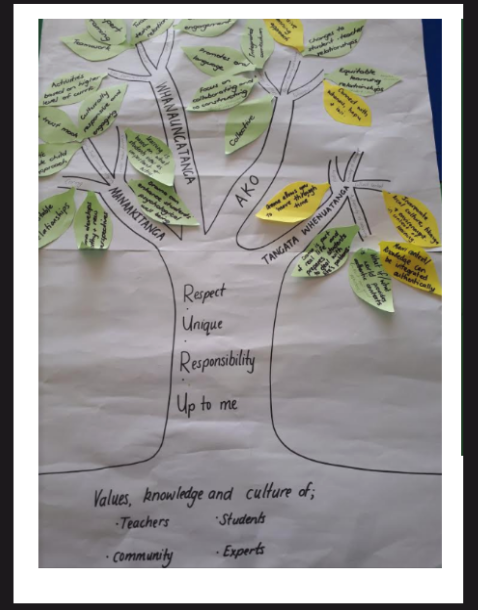
Slides 11-16 give findings from the teachers’ TLIF inquiry including this gorgeous poster / metaphor encapsulating the teacher’s understandings of culturally responsive teaching within Mantle of the Expert at their school.

Slides 17-20 give findings from data analysed in a larger research project. These include THIRTY FIVE benefits for students’ writing mentioned by teachers, and more than FIFTY other benefits observed in the key competencies. Non-confirming and surprise findings are also listed.

Slide 21 shows the huge list of new things the teachers tried in the 2 years of the project.

Slides 22-24 discuss implications and possibilities for future research as well as listing references.

You are welcome to share this information but please acknowledge the original authors.

We will be writing up findings for publication in a peer reviewed journal shortly.

On Monday 15th April, Renee Downey and Viv Aitken had the pleasure of presenting a workshop at the primary teacher’s conference in Wellington. We began by offering a taste of a Mantle of the Expert experience. And to keep things simple, we chose the first Mantle of the Expert Renee ever taught, four years ago, with her year 3-4 class.

Renee’s planning (for full size version, see link below)

Teachers were quickly engaged by the hook. They willingly engaged in activities using drama conventions to explore moments from the imagined world. And before long they were firing out questions that could lead to authentic inquiry across the curriculum: “How far is it to Brazil?” “What would the dangers be of heading into the rainforest?” “How would we get there?” “What do they want us to do with the animals we rescue?”

Of course we could only skim the surface of the complexities of the approach in a short workshop like this, but participants were very positive. We’ve had several follow up inquiries and new enrolments on the site. Welcome aboard!

For slides from the presentation, including full size images of Renee’s planning. Please check out this link.

This one is a real blast from the past … a video made in 2008 (woah, more than a decade ago) about IDEA drama group in Hamilton. This group, which ran for over 5 years, was for adults with intellectual disability and was all about exploring stories through process drama. Occasionally these process dramas were developed into informal performances for sharing with the public. This film drops in on the final stages of rehearsing for one of these shows. The folks from Attitude TV who made this documentary focussed on the family story at the start but for me the real value comes later in the video where members of the cast talk about what it means to them to take high status roles in the process drama: As Aaron says, “In real life I’m a trolley collector but in the play I like to be the manager.”

A reminder to colleagues in Wellington that we have our next cluster meeting coming up soon. Details are as follows. Many thanks to Pauline MacLean and colleagues at St Theresa’s Catholic school who have offered to host this time round.

When: 30th April 4pm onwards

Where: St Theresa’s school, James St, Plimmerton, Porirua 5026

What: An informal gathering for anyone with an interest in Dramatic Inquiry (Play, Process drama, Mantle of the Expert etc). A chance to meet / reconnect with likeminded teachers, ask questions, share stories and explore new drama conventions and planning tools to try in your classroom. We had a great turnout for the previous cluster meeting so let’s hope we see similar interest this time round.

Cost: Only your time

RSVP: Please email Pauline on pauline-maclean@st-theresas.school.nz so we can get an idea of numbers.


All welcome – bring a friend.

Something I’ve been meaning to write about for a while is a new strategy I have been using for bringing a fictional ‘other’ into a classroom drama. What do I mean by a fictional ‘other’? Well, that could be a whole post in its own right, but basically a fictional ‘other’ is anyone from the imagined world that we ‘evoke’ within the classroom world. The fictional other could be a story character, the client in a Mantle of the Expert experience, an angry neighbour or an imaginary member of our class who has made a mess of the PE cupboard and got us all into trouble. Fictional ‘others’ allow teachers to present someone else outside of the classroom as an audience, an interested party – or indeed an impediment – to the work of the classroom. Carrie Swanson writes more about fictional others in a journal article that can be found here.

There are lots of strategies we might use to bring a fictional other to the attention of the class. Probably the most familiar are the strategies of ‘teacher in role’ or ‘adult /person in role’ where the teacher or some other adult or person takes on a role as someone from the imagined world. Often this is done as though the role was actually present and able to speak, move and respond, but there are lots of other possibilities. Dorothy Heathcote’s list of 34 role conventions sets out a whole range of ways in which a teacher in role or person in role can be varied, including some in which the role is represented in non human form, though something like a letter, an object or a piece of discarded clothing. For a list of Heathcote’s role conventions, click here

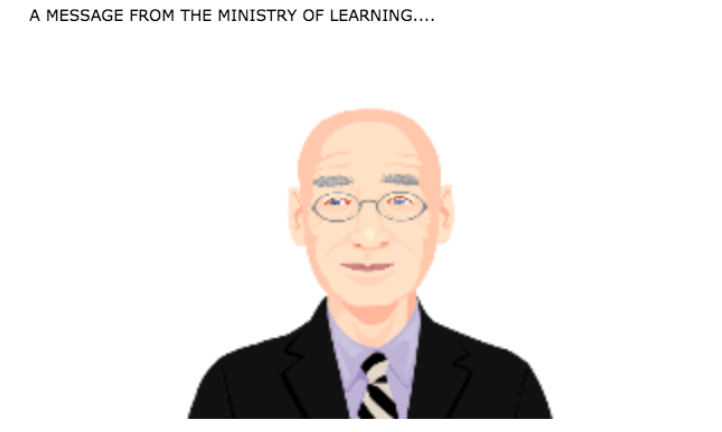
What Heathcote’s list does not include are digital possibilities for evoking a fictional other, and this is something I’ve been experimenting with recently. If you caught up with Miguel’s blog about his Mantle adventures, or my post about working with officials from the Ministry of Education in Bangladesh, you might notice that in both cases we used something called ‘voki’ to evoke the fictional other of the client.

Voki is a free online tool for creating an animation that ‘speaks’ the words you give it to say. Here’s a link to the voki site. And Here’s a quick video of the kind of thing you can produce.

The app gives several options for gender, ethnicity, accent, clothing etc so you can tailor it to suit your situation. My advice would be to keep things realistic and simple rather than going for the more ‘way out’ features – unless that suits your context, of course! One thing I really like about using Voki is how participants could return to the link time and again and revisit it for clarification. It’s also great how you can pull up the voki on a small device like an ipad and thereby ‘evoke’ the role several times over in different parts of the group for different groups. I especially like how when the programmed animation has finished, the fictional other stays ‘present’ with eyes following the cursor: a lovely sense of fictional otherness!

One final tip: Voki can’t always pronounce words correctly so you may find it helpful to spell out some words ‘funnettickly’ !